
THE VERDURE ARCHIVE
Bird of Paradise
Strelitzia reginae
A sculptural bloom with the silhouette of a bird.
The crane flower that was named for a queen.
Few flowers announce themselves like the bird of paradise. From a horizontal green bract, a crest of vivid orange sepals and an electric-blue tongue unfurls in the exact silhouette of a bird mid-flight — a piece of living sculpture that has become one of the most recognized botanical forms on earth.
Native to the coastal thickets and riverbanks of South Africa's Eastern Cape, Strelitzia reginae is the plant the entire genus is measured against.
History
The species reached European gardens through Kew in the 1770s, where it was named by Sir Joseph Banks in honour of Queen Charlotte of Mecklenburg-Strelitz, wife of King George III. The epithet reginae — 'of the queen' — has crowned it ever since.
It has since travelled far beyond its native coast, becoming the official flower of the City of Los Angeles and a shorthand, worldwide, for paradise itself.
Presence
In its homeland the flower is engineered for a single visitor: sunbirds perch on the blue tongue, and their weight parts it to dust their feet with pollen. What reads to us as pure ornament is, in fact, a precise mechanism.
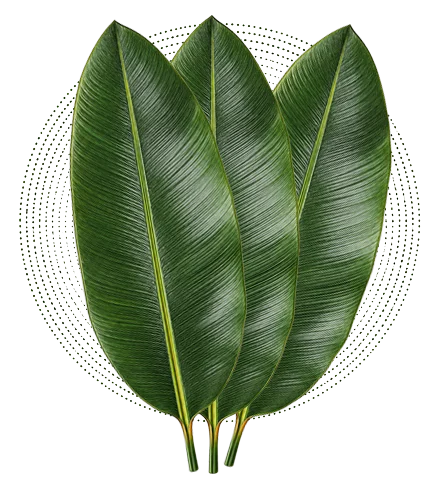
Indoors, that same architecture makes it a statement — an upright fan of grey-green paddles crowned, in maturity, by flowers that need no arranging.
Native Range
Eastern Cape and KwaZulu-Natal coastal belt of South Africa.
Natural Habitat
Riverbanks, coastal bush, and forest margins in warm, frost-free lowlands.
Growth Behavior
Clumping and evergreen; reaches about 1.5m, forming dense fans of leathery leaves.
Insight
Patience is the price of the flower: a seed-grown plant can take three to five years to bloom, but an established clump will then flower for decades.